Most travelers who research northern Kenya’s wildlife destinations start with Samburu and Lake Turkana. Marsabit sits between them, geographically and experientially, and tends to be the destination that surprises people most when they actually get there. After hours of arid lowland driving through dust and scrub, the road climbs steeply into a highland island rising from the surrounding desert: cooler air, cloud-shrouded forest, volcanic craters holding still, dark lakes. It is one of the most abrupt and rewarding ecological transitions available on any Kenya circuit.
Marsabit National Park and Reserve covers approximately 2,088 square kilometers of protected land around and across the volcanic massif of Mount Marsabit, which rises to about 1,707 meters above sea level. The park encompasses highland cloud forest, open grassland, volcanic craters, and the distinctive series of crater lakes that make Marsabit unique among Kenya’s northern parks. It is not a high-density wildlife destination in the Amboseli or Masai Mara sense. It is a landscape destination with wildlife, which is a meaningful distinction for planning purposes.
What Makes Marsabit Ecologically Distinct
The volcanic massif that forms Mount Marsabit creates its own microclimate. Moisture-laden air from the north and east rises against the mountain’s slopes, cools, and condenses into forest. This cloud forest, sitting 800 to 1,000 meters above the surrounding plains, supports species and ecosystem complexity that bears no resemblance to the semi-arid territory visible from the road below.
The park’s crater lakes are the most immediately striking feature. Lake Paradise, also called Sokorte Dika, is the most visited and most photographed: a deep, dark volcanic crater lake surrounded by forest and accessible via a drive from the main gate. The water’s surface is typically calm, the forest edges are close, and elephant tracks lead down to the lake shore from multiple directions. The lake was named by the naturalists Martin and Osa Johnson, who camped here in the 1920s and described it in terms that still ring accurate a century later.
Two other crater lakes, Sokorte Guda and Gof Redo, are also within the park. Gof Redo is particularly notable as a flamingo feeding site when water levels and alkalinity conditions support it. The volcanic landscape around these craters includes lava flows, rocky escarpments, and open calderas that create a visual vocabulary entirely different from the standard East African safari view.
Wildlife and Viewing Expectations
The honest version of Marsabit’s wildlife brief is this: the park holds a meaningful range of species but requires patience and the right expectations. Travelers who arrive looking for dense sightings and rapid checklist progress will find Marsabit frustrating. Travelers who come prepared for a slower, more exploratory style of observation will find it genuinely rewarding.
Elephant are the headline species and the one where Marsabit historically delivered something exceptional. The park’s elephants include some individuals carrying large tusks, a characteristic that brought the park considerable conservation attention in the 1970s and 1980s when ivory poaching devastated large portions of Kenya’s elephant population. The Marsabit elephants, partly protected by their highland forest habitat, survived in better condition than many lowland populations. Current herd numbers have recovered from the worst of the poaching era, and elephant sightings around the crater lakes, particularly at dawn and dusk when animals come to drink, are among the most memorable wildlife encounters the park offers.
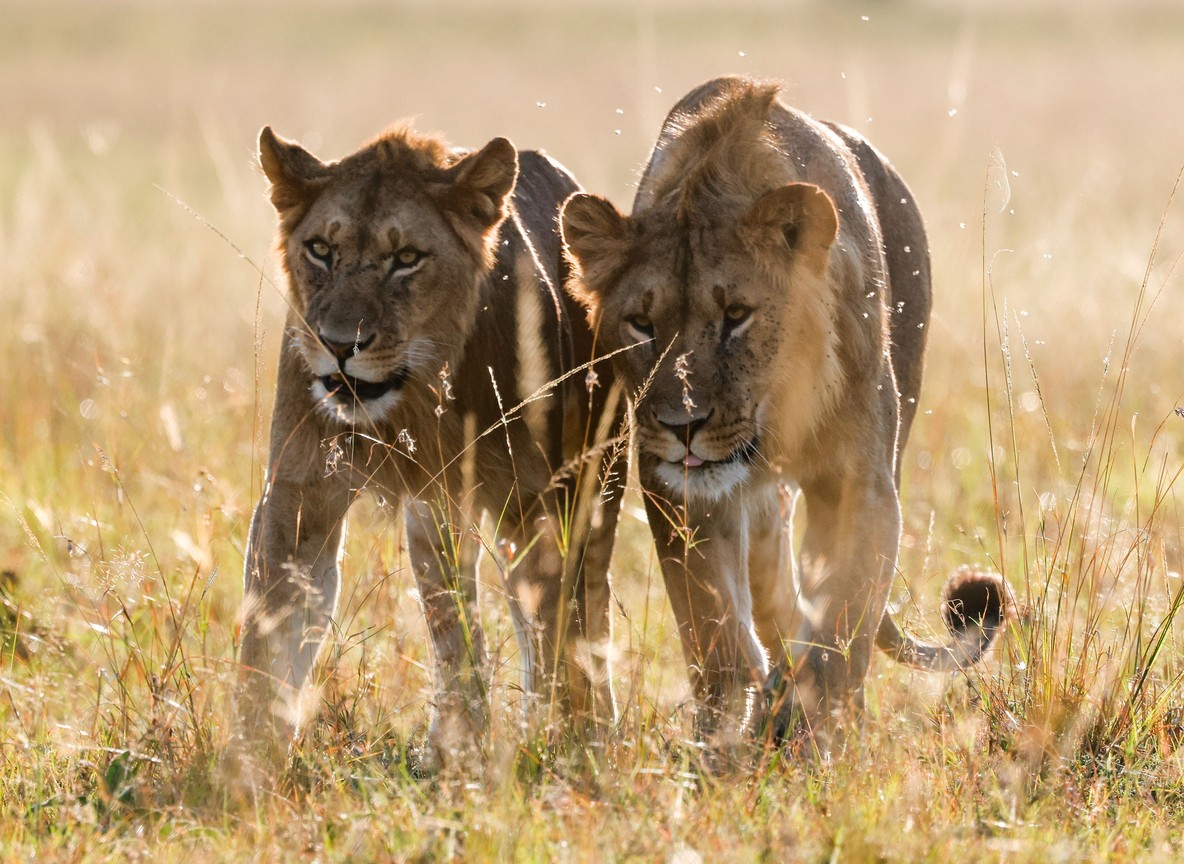
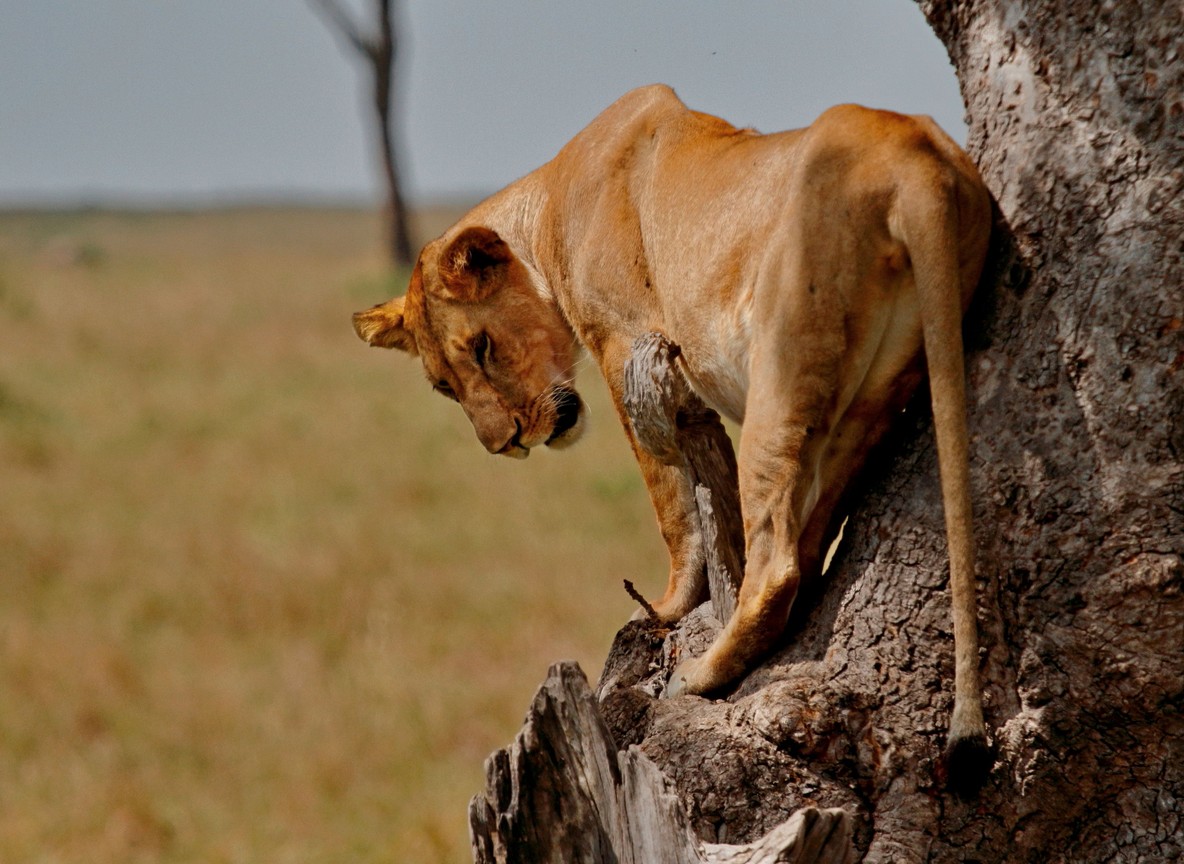
Lion and leopard exist across the park. Leopard are reasonably well represented in the forest zones, typically glimpsed in the early morning or late afternoon around forest edges, rocky outcrops, and along the approach roads to the crater lakes. Lion sightings require more patience and are less predictable than in open-grassland parks, but the park does hold resident prides.
Buffalo are present in the forest and grassland zones, often in small groups rather than the large herds visible in highland parks like Aberdare or Mount Kenya. Greater kudu occupy the rocky slopes and denser bush sections. Reticulated giraffe, the subspecies specific to northern Kenya, range through the park’s open sections and are often visible from the main road between the gate and the crater lake area.
Bird diversity at Marsabit is high for northern Kenya. The forest zone holds species not found in the lowland areas, including several restricted-range forest birds. The crater lakes attract waterfowl, and the open grasslands support raptors including Martial eagle and various smaller hawk species. Birders who have already covered Samburu‘s more specialist northern species will find Marsabit adds a significantly different suite of habitats and targets.
The Crater Lakes in Detail
Lake Paradise (Sokorte Dika) is the most accessible and most consistently visited crater lake. A road from the main park area reaches a viewpoint above the lake and then descends to the shore. Elephant frequently visit early morning and late afternoon. The forest around the lake holds buffalo, kudu, and various forest birds. Photography from the shore, with the dark water reflecting the surrounding tree canopy, is consistently striking regardless of season.
Sokorte Guda is smaller and requires a short walk from the nearest vehicle approach to reach the shore. It is quieter and less visited than Lake Paradise, which makes it preferable for travelers who want an undisturbed wildlife observation experience.
Gof Redo is the flamingo crater. When conditions are right, typically when the alkaline chemistry of the water supports the algae that flamingos feed on, the lake can hold significant numbers of both Lesser and Greater flamingo. These conditions are not guaranteed on any specific visit, but when present they create one of the more unexpected wildlife encounters in northern Kenya.
Route Design: How Marsabit Fits Northern Circuits
Marsabit’s geographic position on the A2 highway between Isiolo and the Ethiopian border at Moyale makes it a natural waypoint on any serious northern Kenya circuit. The tarmac road from Isiolo to Marsabit, substantially improved in recent years, means the approach from the south no longer requires a full day of difficult track. Travelers from Nairobi can realistically reach Marsabit in seven to nine hours with an early start and a brief rest stop at Isiolo.
The direction of travel through a northern circuit often determines how Marsabit fits best:
Samburu first, Marsabit second is the most common routing for overland circuits. This approach builds from the accessible lowland river wildlife of Samburu through the arid Kaisut Desert and up into the highland forest, creating a genuine ecological narrative. The ecological contrast on arriving at Marsabit is strongest when the prior destination was dry lowland.
Marsabit first, then north works well when the primary goal is Lake Turkana or the Chalbi Desert. Travelers who fly in to Nairobi and drive north can stop at Samburu on departure day, continue to Marsabit for one or two nights, and then push north to the Chalbi and Turkana corridor as the main expedition segment.
Fly-in to Marsabit is increasingly viable for travelers on shorter itineraries. An airstrip serves Marsabit town, and light aircraft can cover the Nairobi distance in approximately an hour and fifteen minutes. This format is particularly useful when travelers want a highland contrast stop without the road time, and when the primary itinerary is focused on the Samburu circuit with Marsabit as a meaningful extension.
Hybrid routes that fly one long sector and drive another are especially practical for Marsabit-Lake Turkana combinations, where the Chalbi crossing represents the most demanding road segment. Flying from Nairobi to Marsabit, then driving to Lake Turkana via North Horr and the Chalbi, keeps the most interesting road segment in the itinerary while eliminating the repetitive Nairobi-Isiolo drive.
Best Months for Marsabit
Marsabit’s highland position means its seasonal behavior differs slightly from the lowland northern zones.
January to March delivers stable conditions across the park. The forest is dry enough to reduce mud on park tracks, visibility through the vegetation is reasonable, and the crater lake approaches are straightforward. These months see the widest variety of wildlife in accessible locations.
June to October is the preferred window for most northern circuit travelers. The dry-season conditions that benefit Samburu and the Turkana corridor translate well to Marsabit, with good road conditions across the park and active wildlife around the crater lakes.
November to early December brings greener conditions to the forest after the short rains. The park can be genuinely atmospheric in this period, with mist across the higher sections in early morning. Track conditions are manageable in most years, though some secondary routes may soften temporarily.
April to May is the most complex period in Marsabit specifically because the highland position means the long rains hit more reliably here than in the surrounding lowlands. Some park tracks become difficult for standard vehicles. This period is not recommended unless travelers have high-clearance 4×4 support and flexible timing.
Accommodation and Logistics
Marsabit’s accommodation options are more limited than at the major circuit destinations. The primary options are:
Marsabit Lodge within the national park, positioned near Lake Paradise with direct access to the crater lake and surrounding forest. This is the most established accommodation option within the park and the natural choice for travelers who want to maximize time in wildlife habitat.
Guesthouses in Marsabit town provide practical stopover options for travelers in transit. The town itself sits at the base of the mountain and is a functioning market center for the surrounding region, which means it has fuel, basic supplies, and phone coverage. For expedition-style itineraries where Marsabit is a staging point rather than a primary destination, town accommodation is often more practical than the lodge.
Logistics priorities for Marsabit stays include fuel availability confirmation before arrival from the north, power reliability at the intended accommodation, and communication coverage for trip updates. The town has better connectivity than within the park itself.
Who Should Include Marsabit
Marsabit is a strong fit for specific traveler profiles and less compelling for others.
Travelers who value geographic diversity over pure sighting intensity will find Marsabit one of the best decisions in a northern Kenya circuit. The shift from lowland scrub to highland forest is genuinely dramatic, and the crater lakes are visually unlike anything in the rest of the northern system.
Photographers building a comprehensive visual record of Kenya’s ecological range need Marsabit for forest, highland, and crater-lake shots that are unavailable anywhere else in the north. The atmospheric morning conditions, including mist over the forest and still water in the craters, produce images that look distinctively different from the rest of a northern Kenya shoot.
Travelers building expedition-style northern circuits who want layered ecosystem experience rather than a single-zone concentration will find Marsabit an indispensable connecting piece between the lowland wildlife of Samburu and the desert and lake territory to the north.
For travelers whose primary objective is maximum predator density over a short itinerary, other destinations will deliver stronger sighting frequency. Marsabit is not that kind of park, and approaching it as though it were produces disappointment.
A Sample 5-Day Marsabit Segment
This framework suits travelers approaching from Samburu and heading north toward the Chalbi and Lake Turkana.
Day 1: Depart Samburu area after morning game drive. Drive north via the Laisamis corridor. Rest stop at Laisamis or Logologo. Continue to Marsabit, arriving late afternoon. Town overnight or lodge check-in.
Day 2: Enter the park for a full morning crater lake circuit. Lake Paradise early morning for elephant observation and photography. Continue to Sokorte Guda for a quieter midday stop. Return via the forest route in afternoon. Overnight in park or town.
Day 3: Full secondary field day with the route extended to Gof Redo and the upper forest zone. This day holds buffer capacity for any weather adjustment from Day 2 or for extended observation time at Lake Paradise if elephant or predator activity warrants it.
Day 4: Departure day north. Pre-dawn exit to begin the North Horr approach before peak heat. This staging gets the party onto the Chalbi transit in the optimal early-morning hours.
Day 5: Chalbi crossing or Loiyangalani approach depending on overall itinerary and road conditions confirmed on Day 3.
Practical Notes
Two to three nights in Marsabit is the minimum for a meaningful visit. One night is transit-only pacing and does not give sufficient time for the crater lake circuit and the secondary forest zone. Three nights allows a relaxed rhythm where the best observation conditions, early morning and late afternoon, align with unhurried movement through the park.
Private departure format suits Marsabit well. The park’s road network and the seasonal variability of conditions require the kind of day-to-day adjustment that is only possible when the vehicle and timing are under the direct control of the group.
The approach from Isiolo is a long day’s drive, best started early from the Samburu area. The tarmac quality on the Isiolo to Marsabit section has improved significantly and removes most of the fatigue that this transit used to generate. From Marsabit north, road conditions return to track standard and require the full expedition vehicle and driver capability.
Conclusion
Marsabit is the northern Kenya destination that most consistently exceeds the expectations travelers bring to it. The crater lakes are genuinely beautiful. The highland forest creates a different quality of quiet from the open plains. The ecological contrast with the surrounding arid zone creates one of Kenya’s most dramatic landscape experiences for travelers who drive the transition rather than flying over it. Including Marsabit in a northern circuit adds depth and variety that no single-ecosystem itinerary can replicate.
Reader Next Steps
Travelers combining Marsabit with the Chalbi Desert and Lake Turkana will find the Tourinsights Chalbi Desert expedition guide and the Lake Turkana safari guide essential planning resources. For timing guidance across all northern zones, see the month-by-month northern Kenya conditions guide. Operator-built itineraries covering Marsabit and the full northern corridor are available through Trunktrails Safaris.
Turn this reading into a real itinerary with help from a Kenya-based safari team.
Start Planning Your Safari